



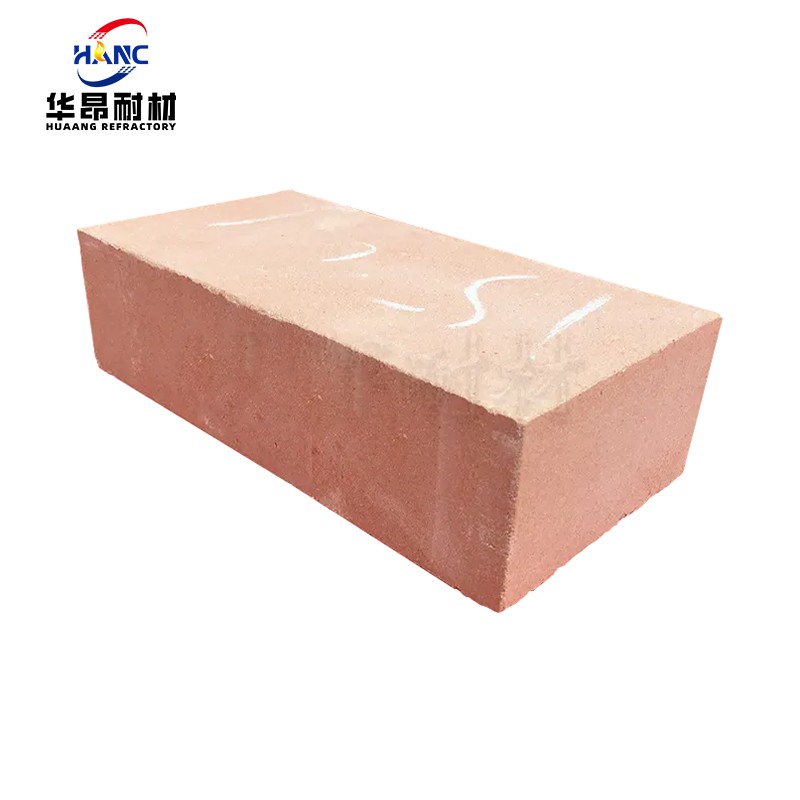

Acid-resistant brick for chimneys and desulphurization towers (without glazed surface)
Size: standard brick T3, 230*114*65 (size can be negotiated and customized according to the drawing)
The main component of chimney acid-resistant brick is silicon dioxide, which is a substance with very high acid resistance. A large amount polyaluminum red corundum is formed by high-temperature sintering. Because the chimney acid-resistant brick structure is dense and has low water, it can also withstand any concentration of alkaline medium at room temperature, but it is not resistant to high-temperature molten alkali.
The of silicon dioxide in chimney acid-resistant brick is more than 60%, which is sintered. In the chemical industry, it is often used to build ditches, acid wells, acid storage tanks and load-bearing ground with large acid. The chimney acid-resistant brick is widely used in the chemical industry. main advantage is its acid resistance, light weight, which greatly reduces the weight of the overall structure, energy saving and environmental protection. Its characteristics are as follows: . It has excellent chemical stability, strong acid resistance, and a certain degree of alkali resistance. 2. The size is smooth and smooth. 3. is light in weight, greatly reducing the weight of the masonry structure, achieving energy saving and environmental protection.
Project | Indicator |
Al2O3/% | 30 |
Volume density g/cm³ | ≤1.9 |
Compressive strength MPa | 18 |
Thermal conductivity(70℃)(W/m·k) ≤ | 0.9 |
Thermal resistance(250℃,4h) | Appearance unchanged, no cracks, swelling, etc. |
Acid resistance(40%H₂SO₄,7d) | Appearance unchanged, no cracks, swelling, etc. |
Use | Acid-resistant insulation |
*Can be negotiated and customized according to the customer's indicators. | |
Previous : OM acid-resistant coating
Next : Chimney, desulfurization tower acid-resistant brick (glazed surface)


 Copy product links
 Long by picture save/share
INQUIRY


Add Successfully
INQUIRY
Add Successfully
HOME | About | Product | News | Case | Contact
Phone:+86 13603821221 E-mail:zzhanc@126.com
Address:河南省新密市牛店镇古角村
Copyright 2025 Huaang. All Rights Reserved

Copyright 2025 Huaang. All Rights Reserved
